
UK Patient Waited 6 Months — Flew to Shanghai, Had Surgery in 2 Weeks
David Richardson was 62 when his GP referred him to a specialist in Manchester. The CT scan showed a 2.8cm mass on the head of his pancreas. The specialist said surgery was possible — a Whipple procedure — but it would take time. NHS referral, staging workup, multidisciplinary team review, surgical scheduling.
“How long?” David asked.
“Three to six months,” the specialist said. “Possibly sooner if it’s fast-tracked.”
David went home and started Googling.
The Wait That Kills
Pancreatic cancer doesn’t wait for healthcare systems. It’s the third leading cause of cancer death in the US and UK, with a 5-year survival rate of around 12%. The cruel math of this disease is that the window for curative surgery is narrow — and it’s closing from the moment of diagnosis.
A 2020 study in the British Journal of Surgery found that for every 4-week delay in pancreatic cancer treatment, the risk of death increases by approximately 6%. For patients waiting 3–6 months on the NHS, that’s not a scheduling inconvenience. It’s a measurable increase in mortality.
The NHS isn’t negligent. It’s overwhelmed. In England alone, over 10,000 people are diagnosed with pancreatic cancer each year. The system has finite surgical capacity, and the queue is long.
But David didn’t have to stay in the queue.
The Discovery
David’s son, a tech worker who’d spent time in Asia, mentioned something at dinner one evening: “Dad, you know you can fly to China without a visa now, right?”
David didn’t know. He looked it up.
In April 2026, China added the United Kingdom, the United States, and Canada to its 30-day visa-free entry policy. Citizens of 47+ countries could now fly to Shanghai, land, walk through immigration with a passport and return ticket, and stay for up to 30 days. No visa application. No embassy appointment. No waiting.
He found that Shanghai had hospitals with standalone pancreatic surgery departments — places like Ruijin Hospital, where surgeons performed over 600 pancreatic resections a year. The published mortality rates were under 2%. The cost was listed at a fraction of what private surgery would cost in the UK.
“I was skeptical,” David says. “You hear ‘medical tourism’ and you think of back-alley clinics. But these were university hospitals publishing in international journals.”
The Numbers That Changed His Mind
David did the math. Here’s what he found:
Option A: UK Private
- Cost: £35,000–£55,000 (Whipple procedure at a private London hospital)
- Wait: 2–4 weeks
- Quality: Good, but limited case volume at most private hospitals
Option B: US
- Cost: $180,000–$250,000
- Wait: 4–8 weeks with insurance pre-authorization
- Quality: World-class, but the cost was impossible
Option C: Shanghai
- Cost: £12,000–£22,000 ($15,000–$28,000)
- Wait: 2–4 weeks from first contact to surgery
- Quality: Published outcomes comparable to top Western centers
- Bonus: 30-day visa-free entry — no paperwork, no delays
“I’m not rich,” David says. “I’m a retired engineer. My NHS option was free but I might die waiting. The private UK option was my savings and then some. Shanghai was… I didn’t believe the price at first.”
What Actually Happened
Week 1: Remote Consultation
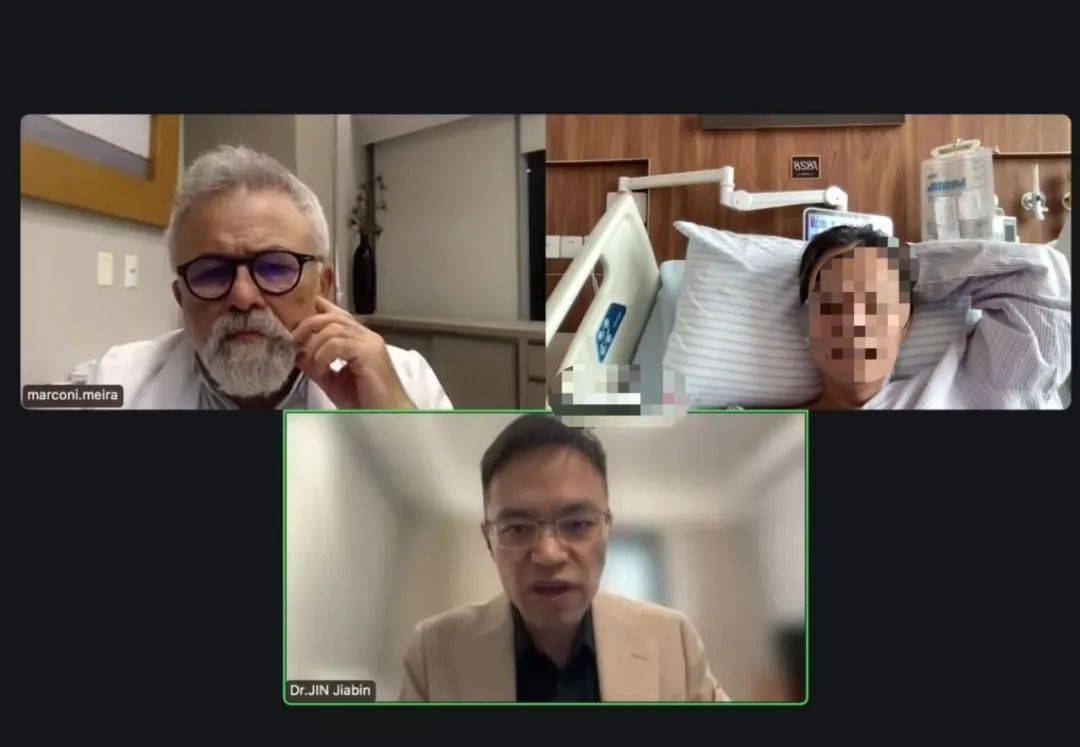
David sent his CT scans, blood work, and pathology report to Ruijin Hospital’s international department via email. Within three days, he had a video call with Dr. Zhang (name changed), the head of pancreatic surgery.
Dr. Zhang reviewed the imaging, confirmed the mass was likely resectable, and outlined the surgical plan: a pylorus-preserving Whipple procedure. He estimated a 3-week stay in Shanghai — surgery plus recovery.
“His English was better than mine,” David says. “He’d trained at Johns Hopkins for two years. He showed me photos of the operating theater. He answered every question without rushing.”
The cost estimate came back: ¥150,000 (~£16,500 / $21,000) all-in for the surgery, hospital stay, and post-operative care. Flights and hotel were separate.
Week 2: Arrival
David flew Manchester → Dubai → Shanghai Pudong. Total travel time: 14 hours. He landed, walked through immigration with his UK passport and a return ticket, and was at the hospital within two hours of landing.
“The international department had a coordinator waiting for me. She spoke perfect English, had a car, and took me to the hospital for my pre-op workup that same afternoon.”
The workup took two days: MRI, blood panels, cardiac clearance, and a final consultation with Dr. Zhang. Surgery was scheduled for the following Monday.
Week 3: Surgery and Recovery
The Whipple procedure took five hours. David was in the ICU for one night, then moved to a private room on the international ward.
“The room was like a hotel room with a hospital bed. My son flew in the day after surgery. The nurses didn’t all speak English, but the coordinator was always reachable by phone.”
By day 5 post-op, David was walking the corridor. By day 8, he was eating soft food. The pathology report came back: clear margins (R0 resection), 2 of 18 lymph nodes positive. Stage IIB.
“Dr. Zhang sat with me for 40 minutes explaining the pathology. He recommended adjuvant chemo — gemcitabine for six months. He wrote a protocol and said my NHS oncologist could administer it.”
Week 4: Home
David flew home on day 24. He had a follow-up video call scheduled for four weeks later. His NHS oncologist in Manchester received the full English-language discharge summary and pathology report.
“My oncologist at Christie Hospital said the surgery was textbook. She had no issues following the Shanghai protocol. She said Ruijin’s volume was higher than any single UK center.”
The Uncomfortable Truth
David’s story has a happy ending. Not every story does. But his case illustrates something that the medical establishment is slowly acknowledging:
The gap between “best possible care” and “care you can actually access” is where people die.
In the UK, the NHS provides excellent cancer care — when you can get it. The waiting lists are the problem, not the quality. For pancreatic cancer specifically, the 62-day target from urgent referral to treatment is consistently missed. In 2024, only 68% of pancreatic cancer patients in England started treatment within 62 days of referral.
In the US, the quality is also excellent — if you have insurance that covers it, and if your out-of-pocket maximum doesn’t bankrupt you. A Whipple procedure at a top US cancer center can generate bills exceeding $200,000.
Shanghai doesn’t offer better medicine than Johns Hopkins or the Royal Marsden. It offers comparable medicine at a fraction of the cost, with wait times measured in weeks instead of months, now accessible without a visa.
That’s not a miracle. It’s arithmetic.
What You Need to Know Before You Go
Based on David’s experience and conversations with other patients who’ve made the trip, here’s the practical reality:
The good:
- Surgical volume at top Shanghai hospitals is genuinely world-class
- Costs are 70–85% lower than the US, 60–75% lower than UK private
- English-language support exists at major international departments
- The visa-free policy eliminates the biggest logistical barrier
- Post-operative care is thorough, and discharge documentation is in English
The hard parts:
- Being sick in a foreign country is emotionally draining, even with good care
- Not every nurse speaks English — you need your coordinator or a companion
- Flying after major abdominal surgery carries real risks (DVT, wound complications)
- Follow-up care requires coordination between Shanghai and your home oncologist
- If complications arise after you return home, your local ER needs to handle it with limited context
What surprised David:
- “The speed. In the UK, everything takes weeks of waiting between appointments. In Shanghai, the pre-op workup was two days. Surgery was the following Monday.”
- “The surgeon’s experience. Dr. Zhang had done over 400 Whipples. My UK surgeon had done maybe 80.”
- “The cost wasn’t just lower — it was transparent. I knew the number before I flew.”
Who This Path Works For
Ideal candidates:
- Diagnosed with resectable pancreatic cancer (stage I–III)
- Facing a wait of 3+ months in their home country
- Uninsured or underinsured for the procedure
- Well enough to fly (this is non-negotiable)
- From a visa-free country (US, UK, Canada, Australia, NZ, most EU)
- Able to bring a companion for emotional and logistical support
Not ideal for:
- Stage IV patients (surgery is generally not indicated)
- Patients too frail to fly
- Those with excellent insurance and short wait times at home
- Patients requiring complex multi-organ resection that their local center specializes in
The Bigger Picture
David’s story is one data point. But it points to a larger shift.
For decades, medical tourism meant flying to Thailand for dental work or to Mexico for cheaper prescriptions. The hepatobiliary-pancreatic surgery space in Shanghai is different. These are academic medical centers, publishing in The Lancet and Annals of Surgery, performing procedures at volumes that rival or exceed most Western institutions.
China’s visa-free policy didn’t create this capability. It revealed it.
For patients like David — educated, motivated, facing a system that can’t see them fast enough — the math has changed. Shanghai isn’t a last resort. It’s a calculated decision based on volume, cost, wait time, and now, visa-free access.
The question isn’t whether it’s legitimate. The data says it is.
The question is whether you can afford to wait.
David Richardson’s name has been changed at his request. His medical details have been shared with his permission. This article is based on his account and publicly available medical data. It does not constitute medical advice. Consult with your treating physician before making any treatment decisions.
Last updated: May 2026.