
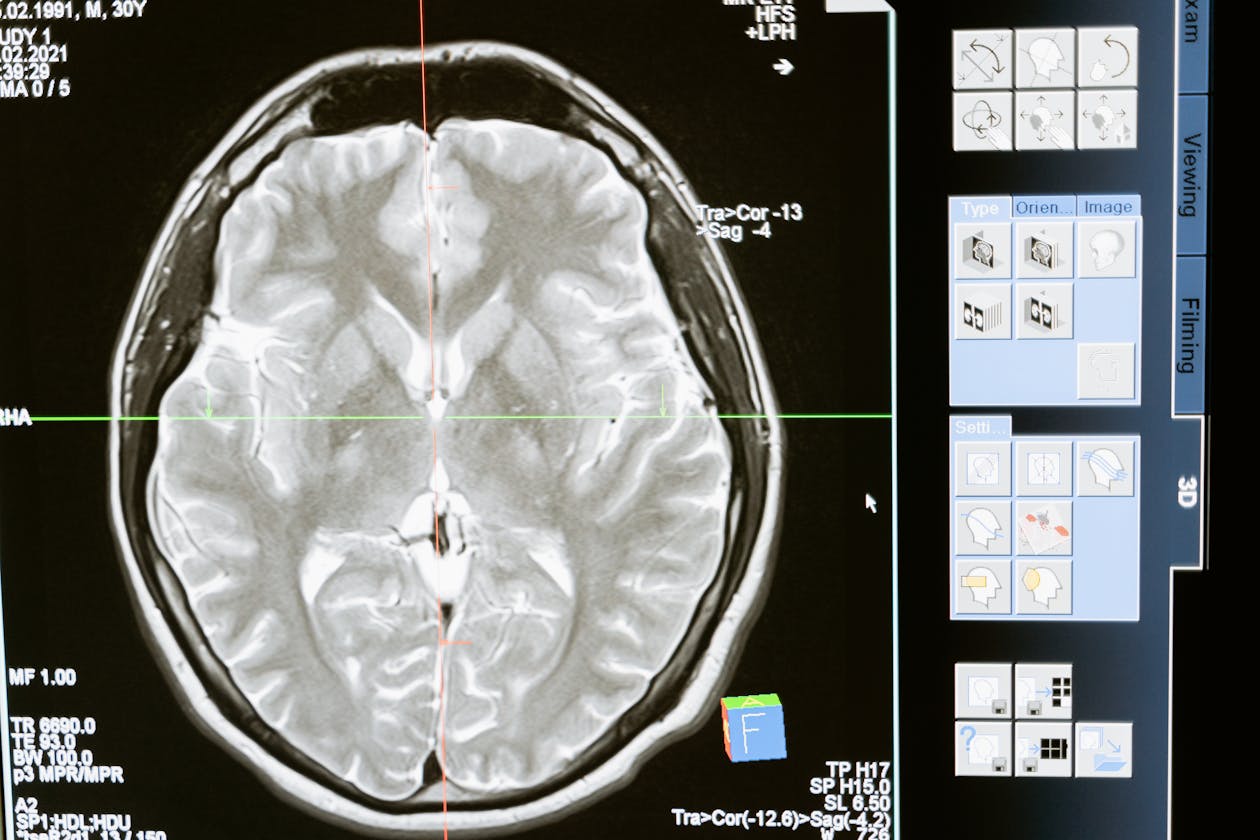
First KRAS G12D Protein Degrader Shows Promise in Pancreatic Cancer — NEJM Phase 1 Data (2026)
First KRAS G12D Protein Degrader Shows Promise in Pancreatic Cancer
Setidegrasib achieves 95.5% KRAS protein degradation in PDAC — what the NEJM Phase 1 data means for patients
Why KRAS G12D Is the Hardest Target in Oncology
KRAS is the most frequently mutated oncogene across all solid tumors. In pancreatic ductal adenocarcinoma (PDAC), it drives roughly 90% of all cases — making it the single most important molecular target in the disease. Among KRAS mutations, G12D is the dominant subtype in PDAC, accounting for approximately 40% of cases.
For years, G12D was considered “undruggable.” Unlike its cousin KRAS G12C — which has a reactive cysteine residue forming a shallow but accessible binding pocket — G12D lacks a covalent handle. The only available pocket is the shallow “Switch-II” groove, which conventional small molecules struggle to engage with enough potency and selectivity.
The result was a frustrating gap: patients with the most common KRAS mutation in pancreatic cancer had no targeted options — while G12C patients began receiving FDA-approved inhibitors.
Protein degradation technology (PROTAC) changed the calculus entirely. Instead of trying to block KRAS G12D with a reversible inhibitor, a PROTAC molecule recruits an E3 ubiquitin ligase to the target, tagging it for destruction by the proteasome. The target doesn’t just get inhibited — it gets eliminated. This is a fundamentally different mechanism, and it just produced its first human data in a landmark NEJM paper.
The Study: Setidegrasib in Advanced NSCLC and Pancreatic Cancer
In April 2026, an international team led by researchers at Memorial Sloan Kettering Cancer Center published the first Phase 1 data for setidegrasib (ASP3082) — a first-in-class, selective KRAS G12D-targeting protein degrader — in the New England Journal of Medicine.
The study was an open-label, international, multicenter Phase 1 trial comprising both dose-escalation and dose-expansion cohorts. A total of 203 patients with KRAS G12D–mutated advanced solid tumors were enrolled:
- 59 patients with non–small cell lung cancer (NSCLC)
- 124 patients with pancreatic cancer
- 20 patients with other tumor types
Patients received intravenous setidegrasib once weekly at doses ranging from 10 mg to 800 mg. The primary endpoints were safety and the recommended Phase 2 dose (RP2D); secondary endpoints included objective response rate (ORR), pharmacokinetics, and pharmacodynamics (degree of KRAS G12D protein degradation).
The RP2D was established at 600 mg weekly.
Key Results: NSCLC
Among 45 heavily pre-treated NSCLC patients (median 2 prior lines; 93% had received platinum-based chemotherapy plus immunotherapy):
| Metric | Result |
|---|---|
| Confirmed ORR | 36% (95% CI: 22–51%) |
| Median PFS | 8.3 months |
| 12-month OS rate | 59% |
In the second/third-line subgroup (32 patients), results were even stronger: ORR reached 38% and median PFS extended to 11.2 months.
For context, standard second-line chemotherapy in KRAS-mutant NSCLC typically yields ORR of 15–25% and median PFS of 3–5 months. A 36% ORR and 8.3-month median PFS in a heavily pre-treated population is clinically meaningful.
Key Results: Pancreatic Cancer
In the 21 patients with metastatic pancreatic cancer (67% had received three or more prior lines of therapy):
| Metric | Result |
|---|---|
| Confirmed ORR | 24% (95% CI: 8–47%) |
| Median PFS | 3.0 months |
| Median OS | 10.3 months (95% CI: 4.2–13.0) |
The median OS of 10.3 months in a heavily pre-treated, late-line pancreatic cancer population is the standout figure. Historical second-line chemotherapy in PDAC produces median OS of approximately 4–6 months — meaning setidegrasib nearly doubled what current standard-of-care chemotherapy achieves in this setting.
The ORR of 24% is also notable. While not curative by any measure, responses in late-line PDAC are rare. Most therapies in this space produce ORR below 10%.
Mechanism: How Deep Is the Degradation?
One of the most compelling aspects of this study is the on-target pharmacodynamic data:
- In NSCLC patients at the 600 mg dose level, KRAS G12D protein was reduced by a median of 70.6% in tumor tissue.
- In pancreatic cancer patients at the same dose, KRAS G12D protein was reduced by a median of 95.5% — nearly complete degradation.
- In patients with disease control, G12D mutant allele frequency in ctDNA dropped by more than 90%.
The pancreatic cancer figure is particularly striking: 95.5% degradation at the tumor level suggests setidegrasib achieves excellent target engagement and on-target activity in PDAC — despite the challenging tumor biology.
Safety Profile
Among the 76 patients who received the RP2D of 600 mg weekly:
- All patients experienced at least one treatment-emergent adverse event (TEAE).
- Grade ≥3 events occurred in 42% of patients, but treatment-related Grade ≥3 events accounted for only 9%.
- No treatment-related deaths were reported.
- No patients discontinued treatment due to toxicity.
The most common treatment-related adverse events were:
- Infusion-related reactions (80%) — all Grade 1–2, predominantly occurring during the first infusion and largely manageable.
- Nausea (30%) — a familiar companion in oncology treatments.
The safety profile is, on balance, favorable. Infusion reactions are manageable with premedication. The absence of treatment-related deaths in a Phase 1 study of heavily pre-treated cancer patients is reassuring.
Expert Perspective
Professor Luo Guopei of Fudan University Cancer Hospital offered this assessment of the study:
“This research represents a paradigm shift in KRAS-targeted therapy — moving from ‘inhibition’ to ‘degradation.’ Setidegrasib uses PROTAC technology to recruit KRAS G12D to the proteasome for complete elimination, theoretically overcoming the resistance mechanisms that plague conventional inhibitors.
The clinical data is encouraging. In late-line pancreatic cancer, a median OS of 10.3 months substantially exceeds historical second-line chemotherapy outcomes of approximately 6 months. The 36% ORR in NSCLC is also competitive. Safety is particularly noteworthy: although infusion reactions are common, they are mild and manageable, with no treatment-related deaths.
Naturally, Phase 1 data has limitations — small sample sizes, single-arm design, and limited follow-up time. Larger randomized controlled trials are needed for confirmation. Combination cohorts are currently being explored, and the combination with chemotherapy or immunotherapy deserves close attention. For the 40% of PDAC patients carrying G12D mutations, this represents a genuine new ray of hope.”
What Comes Next
Several important questions remain before setidegrasib can change standard of care:
Combination strategies are under investigation. The current Phase 1 monotherapy data, while encouraging, will be followed by combination cohorts pairing setidegrasib with chemotherapy and/or immunotherapy. Given that KRAS degradation may sensitize tumors to immune attack — and that pancreatic cancer’s “cold” tumor microenvironment is a major obstacle — the PROTAC + immunotherapy combination is of particular scientific interest.
Phase 2/3 trials are the real test. The single-arm Phase 1 design cannot prove superiority over existing treatments. Randomized trials comparing setidegrasib ± chemotherapy against current standard-of-care regimens in G12D-mutant PDAC will be required to establish its true place in the treatment sequence.
Patient selection matters. This study enrolled KRAS G12D–mutant patients regardless of other molecular features. Future trials may benefit from stratifying by co-occurring mutations (e.g., TP53, SMAD4), tumor mutation burden, or immune infiltrate — particularly as combination regimens evolve.
The Bottom Line
Setidegrasib (ASP3082) is the first KRAS G12D–targeted degrader to report human clinical data, and the results are genuinely encouraging — especially for pancreatic cancer patients with this mutation who have exhausted standard treatment options.
The key numbers to remember:
- 10.3 months median OS in late-line PDAC — nearly double the historical standard-of-care benchmark
- 95.5% KRAS G12D protein degradation in pancreatic cancer tumor tissue — a remarkably high on-target activity signal
- Favorable safety profile — no treatment-related deaths, manageable infusion reactions
- First demonstration that PROTAC-mediated oncoprotein degradation is clinically achievable in humans
The limitations are equally important to acknowledge: Phase 1, single-arm, small sample, heavily pre-treated population. This is an early signal, not a practice-changing conclusion. Randomized Phase 2/3 data will be required before setidegrasib can claim a place in the pancreatic cancer treatment algorithm.
But for the 40% of PDAC patients whose tumors carry a KRAS G12D mutation — a population that has waited years for a targeted option — this study represents a genuine turning point. The PROTAC era in KRAS oncology has begun.
Seeking Treatment in China?
If you or a loved one has been diagnosed with KRAS G12D–mutant pancreatic cancer and is exploring treatment options in China, the following resources may help:
- Clinical Trials in China — Updated listing of open pancreatic cancer trials, including targeted therapies and immunotherapy combinations
- Top Cancer Hospitals in China — Leading pancreatic cancer centers in Shanghai, Beijing, and Guangzhou
- Find a Specialist — Oncologists and surgeons specializing in pancreatic cancer treatment
China’s major cancer centers — including Fudan University Cancer Hospital, Ruijin Hospital, and Zhongshan Hospital — are actively enrolling patients for KRAS-targeted clinical trials and offer cutting-edge treatment protocols at significantly lower costs than Western equivalents.
This article is an English summary of a clinical research review on setidegrasib (KRAS G12D degrader) published by 医周科技 (May 2026), originally sourced from the New England Journal of Medicine. For treatment decisions, consult your oncologist.
Source: Memorial Sloan Kettering Cancer Center / NEJM (April 2026)
Expert commentary: Prof. Luo Guopei, Fudan University Cancer Hospital
This is an independent English summary for informational purposes only. It does not constitute medical advice. Always consult a qualified healthcare provider before making treatment decisions.